
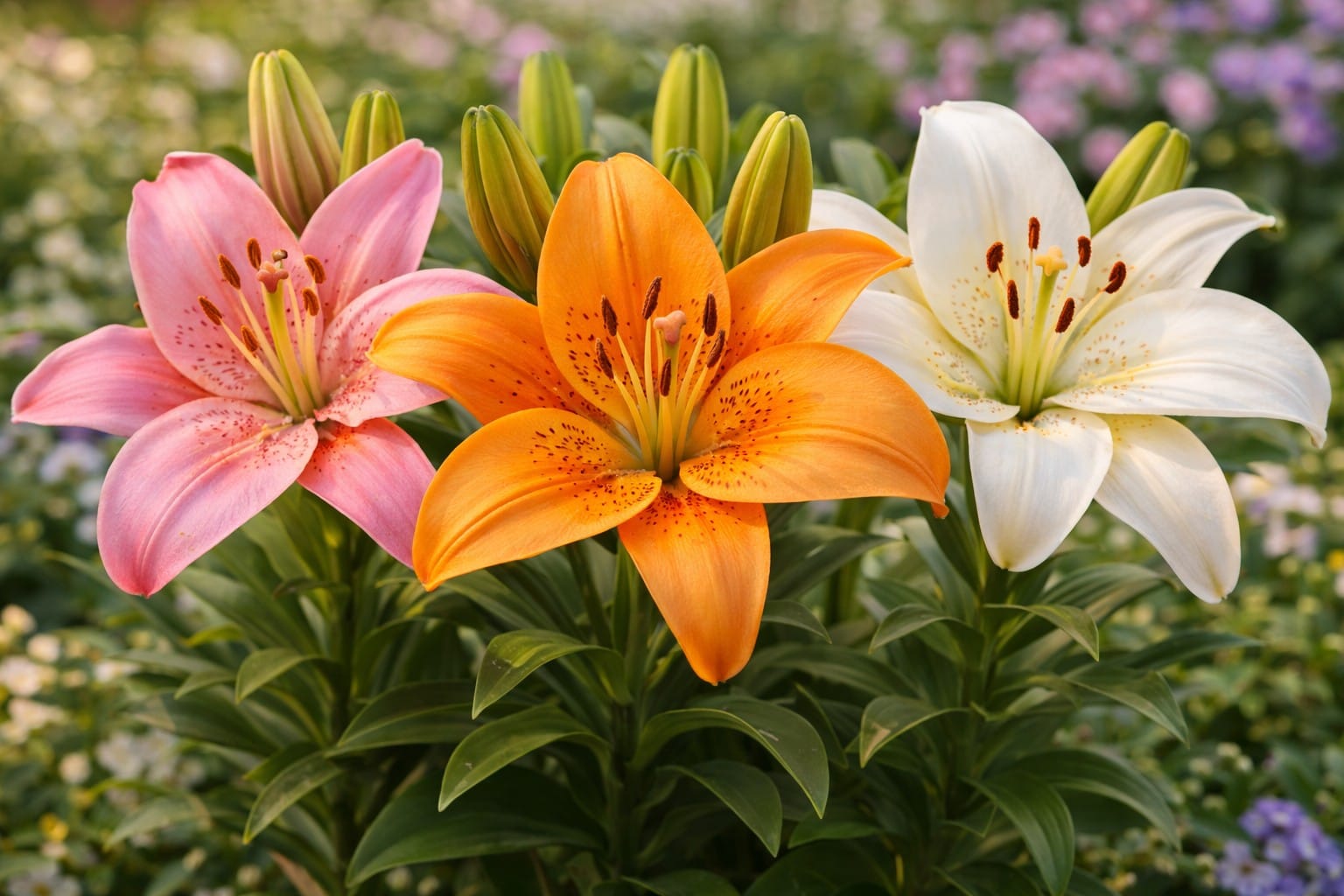
The lily flower is one of the most elegant and recognizable flowers in the world. Known for its large blooms, graceful shape, and powerful fragrance, lilies are grown in gardens, containers, and used widely in bouquets and floral arrangements. They symbolize purity, renewal, love, and devotion, and they are surprisingly easy to grow when their basic needs are met.
This complete guide covers everything about lily flowers, including their meaning, popular types, growing conditions, planting, care, common problems, uses, and expert tips to help you grow healthy, beautiful lilies year after year.
What Is a Lily Flower
A true lily belongs to the genus Lilium. Lilies grow from bulbs and produce tall, upright stems with narrow leaves and large, showy flowers. Each stem can carry multiple blooms, and the flowers often face upward, outward, or downward depending on the variety.
Lilies are native to parts of Asia, Europe, and North America. They are not the same as plants like peace lilies or calla lilies, which are lilies in name only but belong to different plant families.
Lily Flower Meaning and Symbolism
Lilies carry deep symbolic meaning across cultures.
General meanings include:
Purity and innocence
Renewal and rebirth
Devotion and love
Peace and remembrance
Different colors have different meanings:
White lilies symbolize purity and sympathy
Pink lilies represent love and admiration
Yellow lilies express happiness and gratitude
Orange lilies stand for confidence and pride
Red lilies symbolize passion and deep emotion
Because of these meanings, lilies are often used in weddings, religious ceremonies, and memorials.
Types of Lily Flowers
There are many types of lilies, each with unique characteristics.
Asiatic Lilies
Asiatic lilies are among the easiest to grow.
They bloom early in summer
They come in bold colors
They have little to no fragrance
They are excellent for beginners
Oriental Lilies
Oriental lilies are famous for their strong fragrance.
They have large, dramatic flowers
They bloom later in summer
They prefer slightly acidic soil
Trumpet Lilies
These lilies have long, trumpet-shaped flowers.
They are tall and dramatic
They are highly fragrant
They are long-lived and hardy
LA Hybrid Lilies
These are hybrids between Asiatic and Trumpet lilies.
They combine bright colors with light fragrance
They are strong and disease-resistant
Tiger Lilies
Tiger lilies are hardy and eye-catching.
They have orange flowers with dark spots
They spread easily and naturalize well
When Do Lilies Bloom
Lilies typically bloom from early summer to late summer, depending on the variety.
Bloom sequence:
Asiatic lilies bloom first
LA hybrids bloom next
Oriental and trumpet lilies bloom last
By planting multiple types, you can enjoy lilies for several months.
Ideal Growing Conditions for Lilies
Lilies thrive when their basic needs are met.
They prefer:
Full sun to partial shade
Well-draining soil
Cool roots and warm tops
Good air circulation
Lilies like their flowers in the sun but their roots shaded by mulch or nearby plants.
How to Plant Lily Bulbs
Planting lilies correctly is essential for healthy growth.
Best Time to Plant
Plant lily bulbs in fall or early spring.
Step-by-Step Planting
Choose firm, healthy bulbs
Dig holes 6 to 8 inches deep
Space bulbs 8 to 12 inches apart
Place bulbs with pointed end up
Cover with soil and water well
Deeper planting helps support tall stems and prevents toppling.
Soil Requirements for Lilies
Lilies need soil that drains well.
Best soil characteristics:
Loose and fertile
Rich in organic matter
Neutral to slightly acidic pH
Heavy clay soil should be amended with compost or sand to improve drainage.
Growing Lilies in Pots
Lilies grow very well in containers.
Container growing tips:
Use deep pots with drainage holes
Choose high-quality potting mix
Plant bulbs deeper than other flowers
Water regularly but avoid soggy soil
Potted lilies are great for patios, balconies, and entryways.
Watering Lily Plants
Lilies need consistent moisture during growth.
Watering guidelines:
Water deeply once or twice a week
Keep soil evenly moist
Avoid wetting leaves excessively
Reduce watering after blooming
Overwatering can cause bulb rot, so drainage is critical.
Fertilizing Lilies
Lilies are moderate feeders.
Fertilizing tips:
Add compost at planting time
Use balanced fertilizer in spring
Avoid high-nitrogen fertilizers
Feeding supports strong stems and large blooms.
Lily Care After Blooming
Proper post-bloom care helps lilies return next year.
After flowering:
Remove spent flowers to prevent seed formation
Leave stems and leaves intact
Allow foliage to yellow naturally
Cut back only when leaves are fully dead
Leaves feed the bulb for next season’s growth.
Do Lilies Come Back Every Year
Yes, lilies are perennials.
With proper care:
Bulbs multiply underground
Plants return stronger each year
Some varieties naturalize easily
Cold winters and good drainage help lilies thrive long-term.
Common Problems With Lily Flowers
Lilies are hardy but can face some issues.
Common problems include:
Floppy stems from shallow planting
Bud drop due to stress
Poor blooms from low sunlight
Bulb rot from excess moisture
Correct planting depth and site selection prevent most problems.
Pests and Diseases
Lilies can attract certain pests.
Common pests include:
Aphids
Red lily beetles
Slugs
Diseases may include fungal infections in humid conditions.
Hand removal, good airflow, and proper spacing help reduce problems.
Are Lilies Toxic
Yes, many lilies are highly toxic to cats.
Important safety notes:
Even pollen can be deadly to cats
Keep lilies away from pets
Dogs may experience mild symptoms
If you have cats, avoid planting lilies indoors or outdoors.
Using Lily Flowers in Gardens
Lilies are very versatile.
Common garden uses include:
Flower beds and borders
Focal points in landscapes
Cottage and formal gardens
Mixed perennial beds
Their height and structure add elegance to any design.
Lilies as Cut Flowers
Lilies are popular cut flowers.
Cut flower tips:
Cut stems early morning
Remove pollen to prevent staining
Change water regularly
Keep away from direct heat
Lilies last long in vases and make striking arrangements.
Companion Plants for Lilies
Lilies pair well with plants that shade their roots.
Good companions include:
Hostas
Daylilies
Lavender
Low-growing perennials
Companion planting improves soil moisture and visual appeal.
Lily Flowers and Pollinators
Lilies attract pollinators such as:
Bees
Butterflies
Hummingbirds
Their large, open blooms provide easy access to nectar.
Frequently Asked Questions
Lilies grow from bulbs and bloom in summer. They prefer sunny locations with well-draining soil. Lilies return each year with proper care. Most true lilies are toxic to cats and should be handled carefully. Removing spent flowers helps the plant conserve energy.
Final Thoughts
The lily flower is a timeless garden favorite that offers beauty, fragrance, and elegance with surprisingly little effort. With the right planting depth, sunlight, and care, lilies reward gardeners with stunning blooms year after year.
Whether grown in garden beds, containers, or used as cut flowers, lilies bring grace and meaning to any space. Their variety of colors, shapes, and bloom times makes them a perfect choice for both beginner and experienced gardeners looking to add lasting beauty to their landscape.