
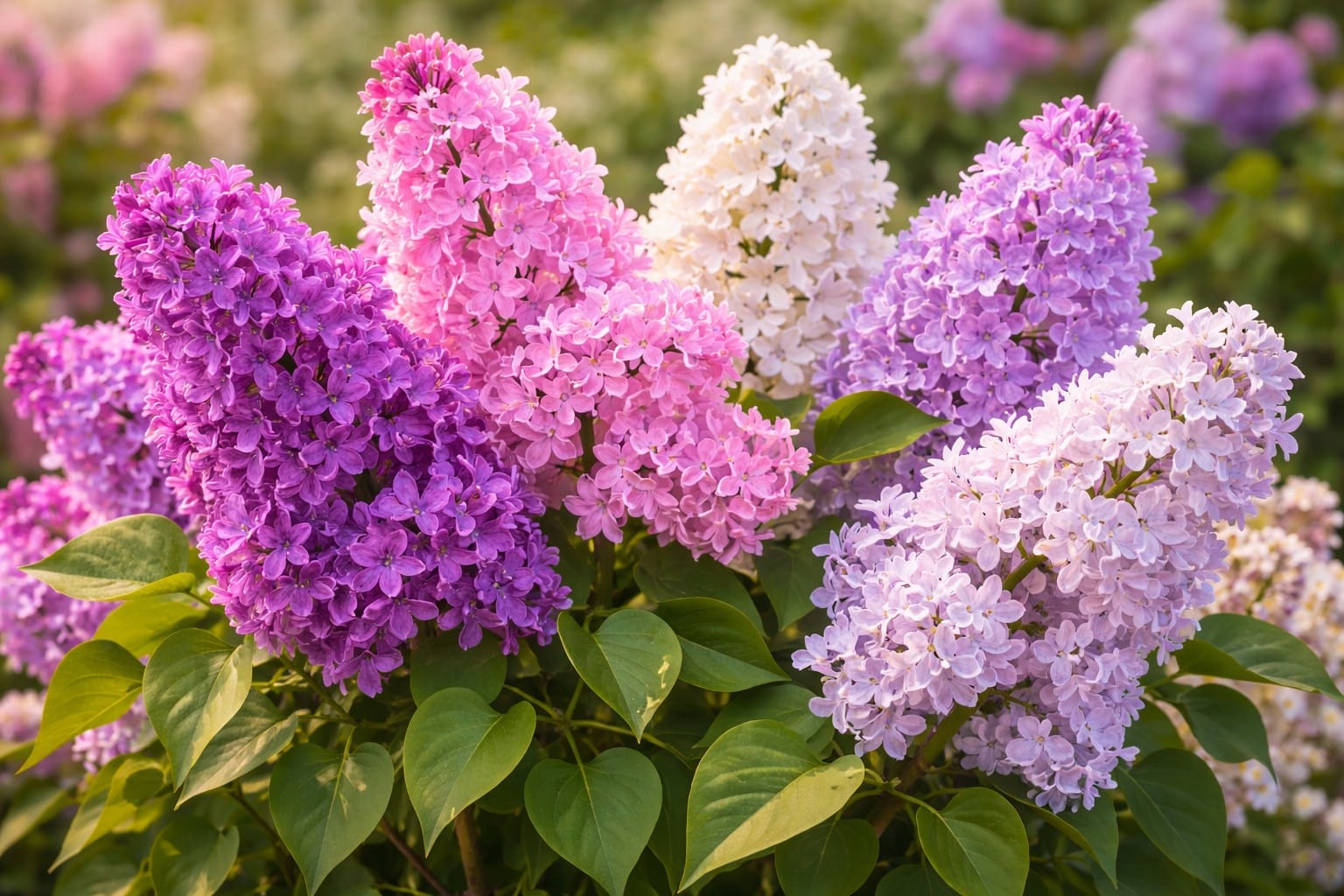
The lilac flower is treasured for its soft beauty, powerful fragrance, and timeless charm. Blooming in spring, lilacs fill gardens with color and scent that feels nostalgic and calming. These flowering shrubs are long-lived, easy to care for once established, and loved in both landscapes and floral arrangements.
This complete guide covers everything about lilac flowers, including their meaning, types, growing conditions, planting, care, pruning, common problems, uses, and frequently asked questions.
What Is a Lilac Flower
Lilac is a flowering shrub from the genus Syringa. It produces cone-shaped clusters of tiny flowers that bloom in late spring. Lilacs are native to Europe and Asia and have been grown in gardens for centuries.
Lilac shrubs can grow anywhere from 5 to 20 feet tall, depending on the variety. They are known for their woody stems, heart-shaped leaves, and unforgettable fragrance.
Lilac Flower Meaning and Symbolism
Lilac flowers carry gentle and emotional symbolism.
Common meanings include:
First love
Youthful innocence
Renewal and spring
Memory and nostalgia
Color meanings:
Purple lilac symbolizes spirituality and first love
White lilac represents purity and innocence
Pink lilac expresses affection and friendship
Blue lilac conveys calm and happiness
Lilacs are often used in weddings, memorial gardens, and meaningful bouquets.
Types of Lilac Flowers
There are many lilac varieties, each with unique traits.
Common Lilac
This is the most popular type, known for strong fragrance and large flower clusters.
Dwarf Lilac
Smaller shrubs ideal for containers and compact gardens.
French Lilac
Produces large, showy blooms and intense fragrance.
Korean Lilac
Cold-hardy variety with smaller flowers and compact growth.
Tree Lilac
Grows more like a small tree and blooms slightly later.
Each variety offers different sizes, bloom times, and growth habits.
When Do Lilacs Bloom
Lilacs typically bloom in mid to late spring, usually between April and May. Bloom time varies based on climate and variety.
Blooms last about 2 to 4 weeks, with fragrance strongest on warm days.
Ideal Growing Conditions for Lilac
Lilacs thrive when planted in the right environment.
They prefer:
Full sun for best flowering
Well-draining soil
Cool winters
Moderate moisture
Lilacs do not perform well in hot, humid climates with mild winters.
How to Plant Lilac Bushes
Proper planting ensures healthy growth.
Best Time to Plant
Plant lilacs in early spring or fall when temperatures are mild.
Step-by-Step Planting
Choose a sunny location
Dig a hole twice as wide as the root ball
Place plant at soil level
Backfill with soil and compost
Water thoroughly after planting
Good air circulation helps prevent disease.
Soil Requirements for Lilac
Lilacs prefer:
Loose, well-draining soil
Neutral to slightly alkaline pH
Organic matter for nutrients
Avoid acidic or waterlogged soil, which reduces flowering.
Watering Lilac Plants
Lilacs are drought-tolerant once established.
Watering tips include:
Water deeply during dry periods
Avoid overwatering
Keep soil moist during first year
Too much water can cause root problems.
Fertilizing Lilacs
Lilacs require minimal feeding.
Fertilizing guidelines:
Add compost annually
Use balanced fertilizer in early spring if needed
Avoid high-nitrogen fertilizers
Too much nitrogen promotes leaves instead of flowers.
Pruning Lilac Bushes
Pruning is essential for bloom production.
Best pruning practices:
Prune immediately after flowering
Remove dead or weak branches
Thin older stems to encourage new growth
Avoid pruning in late summer or fall
Lilacs bloom on old wood, so timing matters.
Common Problems With Lilacs
Lilacs are hardy but can face issues.
Common problems include:
Poor flowering due to lack of sun
Powdery mildew
Root rot from poor drainage
Overcrowding
Proper spacing and airflow reduce problems.
Pests and Diseases
Possible pests include:
Aphids
Scale insects
Borers
Diseases may include powdery mildew or fungal infections.
Good sanitation and pruning help prevent disease.
Do Lilacs Come Back Every Year
Yes, lilacs are perennial shrubs.
With proper care, lilacs can live 50 years or more, blooming reliably each spring.
Growing Lilacs in Containers
Dwarf lilac varieties grow well in large pots.
Container tips include:
Choose large, sturdy containers
Ensure excellent drainage
Water more frequently
Provide winter protection in cold climates
Using Lilac Flowers
Lilacs are used in many ways.
Common uses include:
Landscape focal points
Hedges and borders
Cut flower arrangements
Fragrance gardens
Pollinator gardens
Lilacs attract bees and butterflies.
Lilac Flower Fragrance
Lilac fragrance is iconic.
It is often described as:
Sweet
Fresh
Floral
Softly spicy
Lilac scent is widely used in perfumes and soaps.
Lilacs and Wildlife
Lilacs support garden ecosystems.
They attract:
Bees
Butterflies
Birds seeking shelter
They are deer-resistant in many regions.
Frequently Asked Questions
Lilacs bloom in spring and prefer full sun. They require cold winters to flower well. Lilacs need minimal fertilization and regular pruning after blooming. With proper care, lilacs can live for decades and become garden heirlooms.
Final Thoughts
The lilac flower is a symbol of spring beauty, fragrance, and emotional connection. Easy to grow, long-lived, and deeply rewarding, lilacs are perfect for gardeners who want a reliable flowering shrub with timeless appeal.
With proper planting, sunlight, and pruning, lilacs will return year after year, filling your garden with unforgettable scent and charm.