
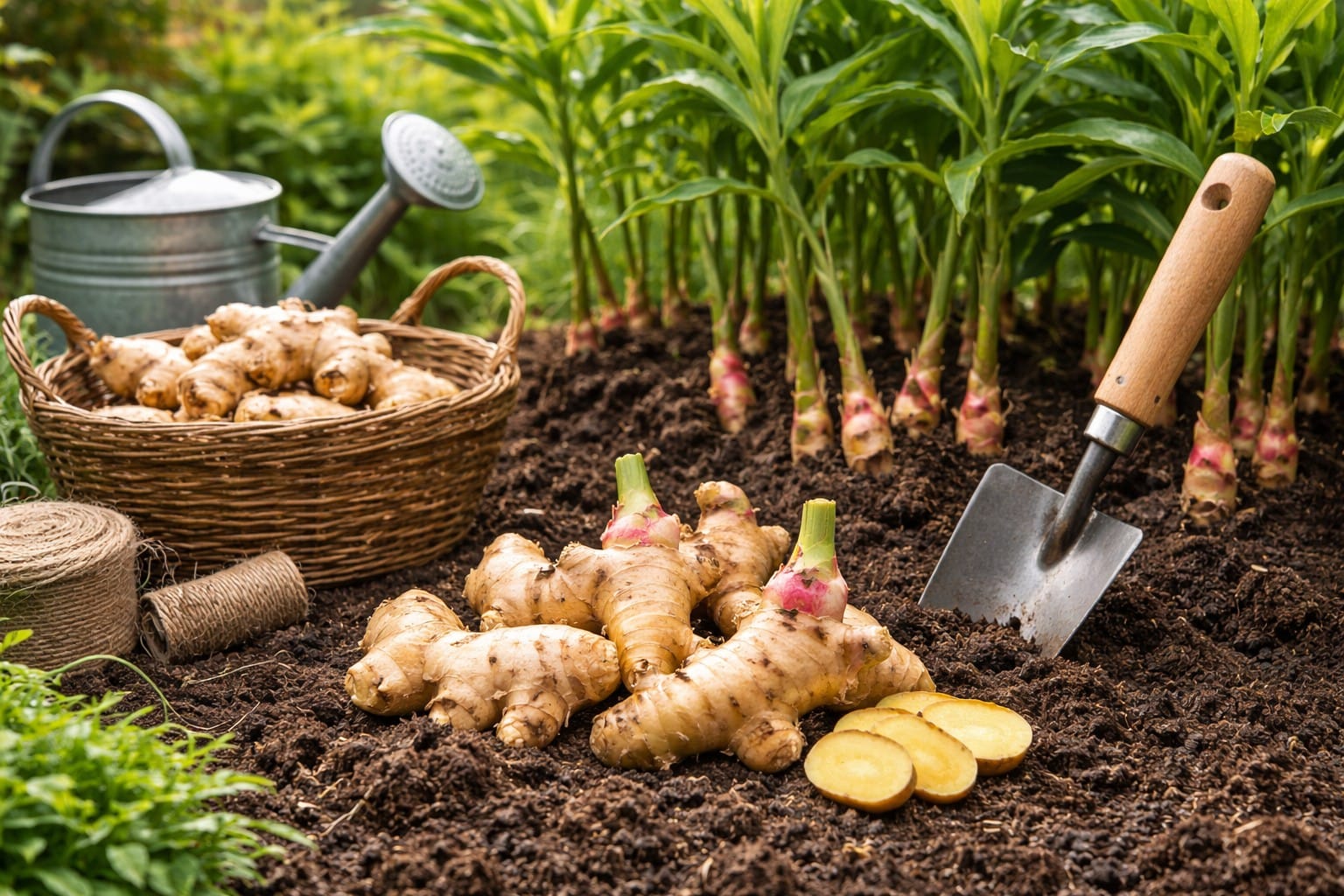
Gardening ginger at home is easier than most people think. Ginger is a tropical plant grown for its flavorful, spicy rhizome that is widely used in cooking, teas, and natural remedies. With the right soil, warmth, moisture, and patience, you can grow fresh ginger successfully in your garden, raised beds, or even containers indoors.
This complete guide covers everything you need to know about gardening ginger, including what ginger is, how it grows, planting methods, soil and light needs, watering, fertilizing, common mistakes, harvesting, storage, and expert tips to help you grow healthy, high-quality ginger at home.
What Is Ginger and How It Grows
Ginger is a tropical perennial plant scientifically known as Zingiber officinale. The part we eat is not a root but a rhizome, which grows horizontally underground. Above the soil, ginger produces long, narrow green leaves that resemble grass or bamboo.
Ginger grows best in warm climates with high humidity, but it can also be grown in cooler regions by planting in containers and moving them indoors when temperatures drop.
Ginger is slow-growing and requires patience, but the reward is fresh, aromatic ginger that tastes far better than store-bought varieties.
Benefits of Growing Ginger at Home
Growing ginger at home offers many advantages.
Homegrown ginger is fresher and more flavorful
You control soil quality and avoid chemicals
It is cost-effective over time
Ginger plants are attractive and decorative
You can harvest young or mature ginger
Fresh ginger also contains higher levels of natural oils, making it more aromatic and potent.
Best Climate for Gardening Ginger
Ginger thrives in warm, tropical to subtropical climates.
Ideal growing conditions include:
Temperatures between 70°F and 90°F
High humidity
No frost exposure
Long growing season
In cooler climates, ginger grows well indoors, greenhouses, or during warm months outdoors.
Choosing Ginger for Planting
You can grow ginger from fresh ginger rhizomes purchased at grocery stores or garden centers.
When choosing ginger for planting:
Select firm, plump rhizomes
Look for visible growth buds or “eyes”
Avoid shriveled or moldy pieces
Organic ginger is best, as it is less likely treated with growth inhibitors
Each piece should have at least one healthy bud.
Best Time to Plant Ginger
Ginger needs a long growing season.
Best planting times include:
Early spring in warm climates
Late winter indoors for cooler regions
Any time indoors if temperature is controlled
Ginger takes about 8 to 10 months to fully mature.
Soil Requirements for Growing Ginger
Soil quality plays a major role in ginger gardening.
Ginger prefers soil that is:
Loose and well-draining
Rich in organic matter
Slightly acidic to neutral
Moist but not waterlogged
A good soil mix includes garden soil, compost, and sand or coco coir to improve drainage.
Heavy clay soil should be avoided, as it can cause rhizomes to rot.
Container Gardening Ginger
Ginger grows extremely well in containers.
Container tips include:
Use a wide, shallow pot
Ensure good drainage holes
Choose a pot at least 12 inches wide
Avoid deep narrow containers
Because ginger spreads horizontally, wide containers support better growth.
Planting Ginger Step by Step
Step 1: Cut ginger rhizomes into pieces, each with at least one bud
Step 2: Let cut pieces dry for 24 hours to reduce rot risk
Step 3: Fill container or bed with prepared soil
Step 4: Plant rhizomes 1 to 2 inches deep with buds facing up
Step 5: Space pieces about 8 inches apart
Step 6: Water lightly after planting
Ginger sprouts slowly, sometimes taking 2 to 4 weeks to appear.
Light Requirements for Ginger Plants
Ginger does not like harsh direct sunlight.
Best light conditions include:
Partial shade
Filtered sunlight
Bright indirect light indoors
Too much sun can scorch leaves, while too little light slows growth.
Watering Ginger Plants
Proper watering is essential for healthy ginger growth.
Watering tips include:
Keep soil consistently moist
Avoid soggy soil
Reduce watering during cold periods
Water more during active growth
Overwatering is one of the most common mistakes when gardening ginger.
Fertilizing Ginger for Better Growth
Ginger is a heavy feeder and benefits from regular nutrients.
Fertilizing guidelines:
Use compost or organic fertilizer
Feed every 4 to 6 weeks
High potassium fertilizers support rhizome growth
Avoid excessive nitrogen
Balanced feeding leads to stronger plants and larger rhizomes.
Mulching Ginger Plants
Mulching helps retain moisture and regulate soil temperature.
Good mulch options include:
Straw
Dried leaves
Compost
Coco husk
Mulch also protects shallow rhizomes from temperature changes.
Common Problems When Gardening Ginger
Some issues may occur during growth.
Common problems include:
Yellowing leaves from overwatering
Slow growth due to low temperature
Rhizome rot from poor drainage
Pests such as aphids or spider mites
Healthy soil and proper watering prevent most issues.
Pests and Diseases Affecting Ginger
Ginger is relatively pest-resistant but not immune.
Possible pests include:
Aphids
Spider mites
Mealybugs
Diseases may include fungal rot caused by excess moisture.
Solutions include improving airflow, reducing water, and using organic pest control methods.
Growing Ginger Indoors
Indoor ginger gardening is ideal for cold climates.
Indoor growing tips:
Place near bright windows
Maintain warm temperatures
Use humidity trays if air is dry
Rotate pots for even growth
Indoor ginger grows slower but remains productive.
Harvesting Ginger
You can harvest ginger at different stages.
Young ginger can be harvested after 4 to 6 months
Mature ginger is ready after 8 to 10 months
To harvest:
Gently dig around the plant
Remove part of the rhizome
Leave the rest to continue growing
Leaves will begin to yellow when ginger is fully mature.
Storing Fresh Ginger
Proper storage keeps ginger fresh longer.
Storage methods include:
Refrigerating unwashed rhizomes
Freezing peeled ginger
Storing in airtight containers
Drying or dehydrating ginger
Fresh ginger stored correctly can last several weeks.
Regrowing Ginger After Harvest
Ginger can be regrown continuously.
After harvesting:
Leave some rhizomes in soil
Add compost
Resume watering
New shoots will emerge
This makes ginger a renewable garden crop.
Common Mistakes to Avoid
Avoiding mistakes improves success.
Common errors include:
Planting too deep
Using poor soil
Overwatering
Exposing plants to frost
Harvesting too early
Patience is key when growing ginger.
Ginger Companion Plants
Some plants grow well near ginger.
Good companions include:
Turmeric
Lemongrass
Basil
Chili peppers
These plants enjoy similar growing conditions.
Gardening Ginger in Raised Beds
Raised beds are excellent for ginger.
Benefits include:
Better drainage
Warmer soil
Easier maintenance
Healthier rhizomes
Beds should be at least 8 inches deep.
Frequently Asked Questions
Ginger takes several months to grow and prefers warm temperatures. It can be grown indoors or outdoors with proper care. Fresh ginger can be harvested gradually without killing the plant. Well-draining soil and consistent moisture are essential. Ginger plants can live for several years if protected from cold.
Final Thoughts
Gardening ginger is rewarding, practical, and surprisingly simple once you understand its needs. With warm temperatures, rich soil, gentle light, and patience, you can grow fresh ginger at home year-round. Whether in containers, raised beds, or garden soil, ginger adds value to your garden and your kitchen.
Growing your own ginger connects you directly to your food and provides a steady supply of fresh, flavorful rhizomes that elevate everyday cooking and natural wellness.