
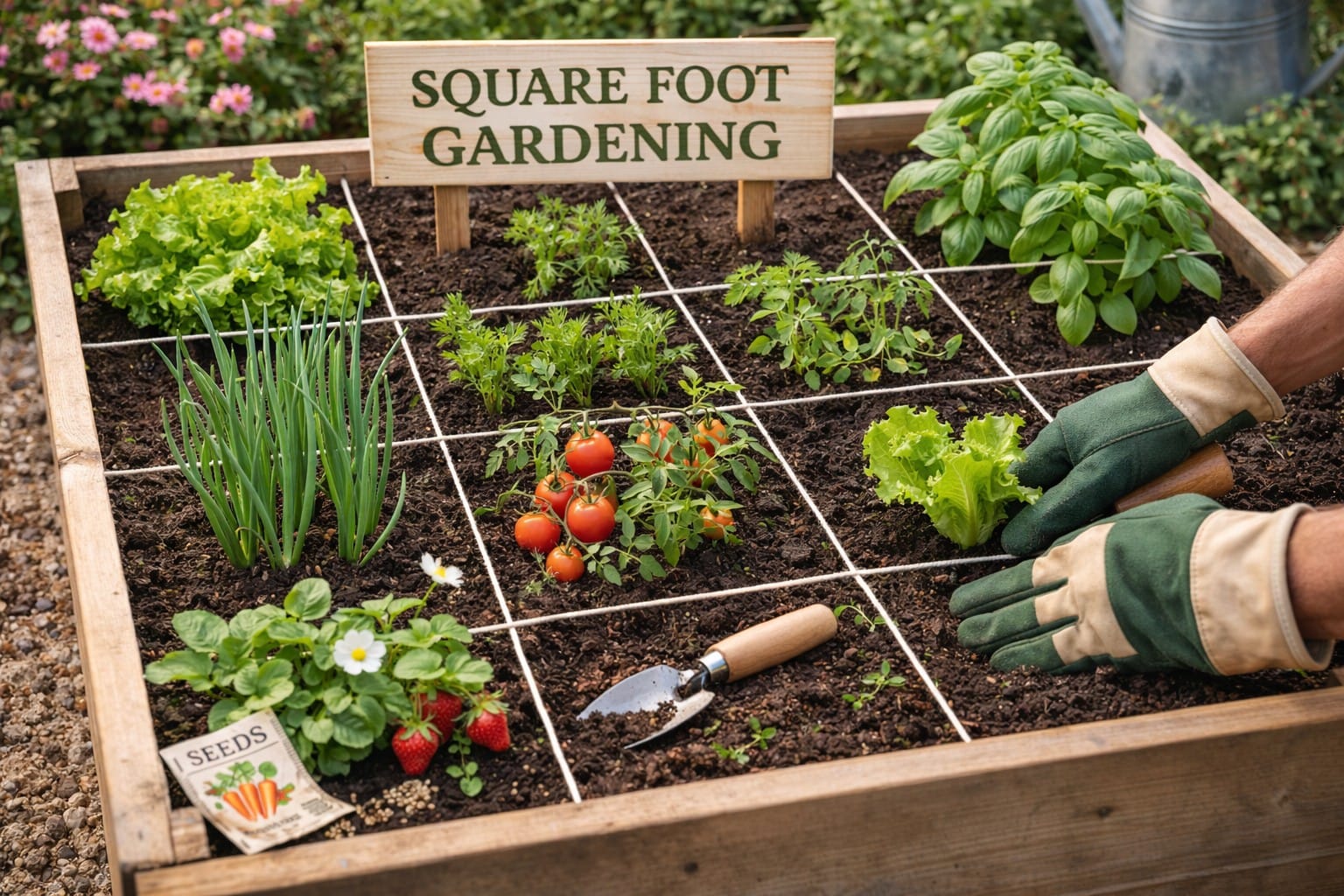
Square foot gardening is one of the easiest, smartest, and most efficient ways to grow vegetables, herbs, and flowers. It is perfect for beginners, small spaces, raised beds, and anyone who wants high yields with less work. Instead of planting in long rows, square foot gardening divides a garden bed into small, organized squares, making planting, watering, and maintenance simple and predictable.
This detailed guide explains square foot gardening from start to finish, including what it is, how it works, materials needed, step-by-step setup, planting rules, spacing charts, watering, soil mix, common mistakes, benefits, limitations, tips for success, and frequently asked questions.
What Is Square Foot Gardening
Square foot gardening is a gardening method where a raised bed is divided into 1-foot by 1-foot squares. Each square is planted with a specific number of plants based on their size. This system was developed to reduce waste, save space, and make gardening easier and more productive.
Instead of guessing plant spacing, square foot gardening gives clear rules. Each plant gets exactly the space it needs, no more and no less.
This method works well for:
Vegetables
Herbs
Leafy greens
Small fruits
Companion planting
It is especially popular in backyard gardens, patios, balconies, and urban spaces.
Why Square Foot Gardening Works So Well
Square foot gardening focuses on efficiency.
It helps gardeners:
Grow more food in less space
Reduce weeds
Save water
Avoid overcrowding
Simplify planning
Maintain healthy soil
Because plants are closely spaced but not crowded, they shade the soil, keeping moisture in and weeds out.
Square Foot Gardening vs Traditional Row Gardening
Traditional gardening uses long rows with wide paths. This wastes space and often leads to weeds and uneven watering.
Square foot gardening:
Uses raised beds
Eliminates walking on soil
Maximizes growing area
Requires less digging
Keeps soil loose and healthy
Row gardening may be better for large farms, but square foot gardening is ideal for home gardeners.
Materials Needed for Square Foot Gardening
You do not need many tools to get started.
Basic materials include:
A raised bed (wood, metal, or plastic)
Soil mix
Grid material (wood strips, string, or wire)
Seeds or seedlings
Watering can or hose
Optional tools include hand trowels, markers, and mulch.
Ideal Size for a Square Foot Garden
The most common size is a 4-foot by 4-foot raised bed, which creates 16 square-foot sections. This size is easy to reach from all sides without stepping into the bed.
Other popular sizes include:
2 x 4 feet
4 x 6 feet
4 x 8 feet
The key rule is that you should be able to reach the center comfortably.
Best Soil Mix for Square Foot Gardening
Soil quality is one of the most important parts of square foot gardening.
The recommended mix is often called Mel’s Mix, which includes:
One-third compost
One-third peat moss or coco coir
One-third vermiculite
This mix is light, drains well, holds moisture, and provides nutrients.
Avoid using garden soil alone, as it can become compacted in raised beds.
How to Build a Square Foot Garden Step by Step
Step 1: Choose a sunny location with at least 6 to 8 hours of sunlight.
Step 2: Build or place your raised bed on level ground.
Step 3: Fill the bed with your soil mix.
Step 4: Create a grid on top of the bed using wood strips or string.
Step 5: Label each square if needed.
Step 6: Plant seeds or seedlings according to spacing rules.
Step 7: Water gently and evenly.
Once set up, maintenance is minimal.
Square Foot Gardening Spacing Rules
Each square holds a specific number of plants based on size.
General spacing guidelines:
1 plant per square for large plants
4 plants per square for medium plants
9 plants per square for small plants
16 plants per square for very small plants
Examples include:
Tomatoes: 1 per square
Peppers: 1 per square
Lettuce: 4 per square
Spinach: 9 per square
Radishes: 16 per square
These rules prevent overcrowding while maximizing yield.
Best Plants for Square Foot Gardening
Many plants thrive using this method.
Excellent choices include:
Lettuce
Spinach
Carrots
Beets
Radishes
Peppers
Tomatoes
Herbs
Green onions
Large spreading plants like pumpkins or watermelons need special planning or vertical support.
Vertical Gardening in Square Foot Beds
Vertical growing saves even more space.
You can grow vertically using:
Trellises
Cages
Netting
Stakes
Best plants for vertical growing include:
Tomatoes
Cucumbers
Peas
Beans
Vertical gardening keeps plants healthy and improves airflow.
Watering Square Foot Gardens
Square foot gardens use less water than traditional gardens.
Watering tips include:
Water deeply but gently
Avoid soaking leaves
Check soil moisture regularly
Water early in the morning
Because soil is loose and rich, it holds moisture well.
Fertilizing Square Foot Gardens
Most nutrients come from compost.
Fertilizing tips:
Add compost between plantings
Refresh soil each season
Avoid over-fertilizing
Use organic compost for best results
Healthy soil means healthy plants.
Weed Control in Square Foot Gardening
Weeds are minimal due to close spacing.
Weed control methods include:
Hand-pulling small weeds
Mulching paths
Avoiding bare soil
Removing weeds early
Many gardeners report almost no weeding after setup.
Pest Control in Square Foot Gardens
Pests can still appear, but they are easier to manage.
Helpful methods include:
Companion planting
Manual removal
Row covers
Healthy soil practices
Smaller spaces make pest monitoring easier.
Common Square Foot Gardening Mistakes
Some mistakes reduce success.
Common errors include:
Using poor soil
Ignoring spacing rules
Overcrowding plants
Walking in the bed
Skipping compost
Following the system closely leads to better results.
Square Foot Gardening for Beginners
This method is ideal for beginners.
Reasons include:
Clear rules
Low maintenance
Small learning curve
High success rate
Beginners gain confidence quickly using square foot gardening.
Square Foot Gardening in Small Spaces
Square foot gardening works well in:
Balconies
Patios
Rooftops
Urban yards
Raised beds can be adapted to almost any space.
Seasonal Planning for Square Foot Gardens
Planning helps maximize harvests.
Seasonal tips include:
Plant cool crops early
Replace harvested plants quickly
Rotate crops each season
Use succession planting
This keeps beds productive all year.
Square Foot Gardening and Crop Rotation
Crop rotation improves soil health.
Simple rotation ideas include:
Leafy greens after root crops
Legumes after heavy feeders
Avoid repeating the same plant in the same square
Rotation reduces pests and nutrient depletion.
Advantages of Square Foot Gardening
Major benefits include:
Higher yields
Less water usage
Minimal weeds
Better soil health
Easy maintenance
Clear organization
It is efficient and beginner-friendly.
Limitations of Square Foot Gardening
There are some limitations.
Possible challenges include:
Initial setup cost
Limited space for large crops
Need for quality compost
Not ideal for large-scale farming
However, benefits often outweigh drawbacks for home gardeners.
Frequently Asked Questions
Square foot gardening is a method that divides raised beds into one-foot squares to control spacing and maximize yield. It is ideal for beginners and small spaces. Most vegetables can be grown using this method. Good soil and proper spacing are key to success. Square foot gardening uses less water and produces fewer weeds than traditional gardening.
Final Thoughts
Square foot gardening is a simple, organized, and highly effective way to grow food. By focusing on proper spacing, rich soil, and efficient use of space, it removes much of the guesswork from gardening. Whether you are new to gardening or looking to improve productivity, square foot gardening offers a proven system that delivers consistent results.
With a small bed, a clear plan, and a little care, you can grow a healthy, productive garden that fits your space, your schedule, and your goals.