
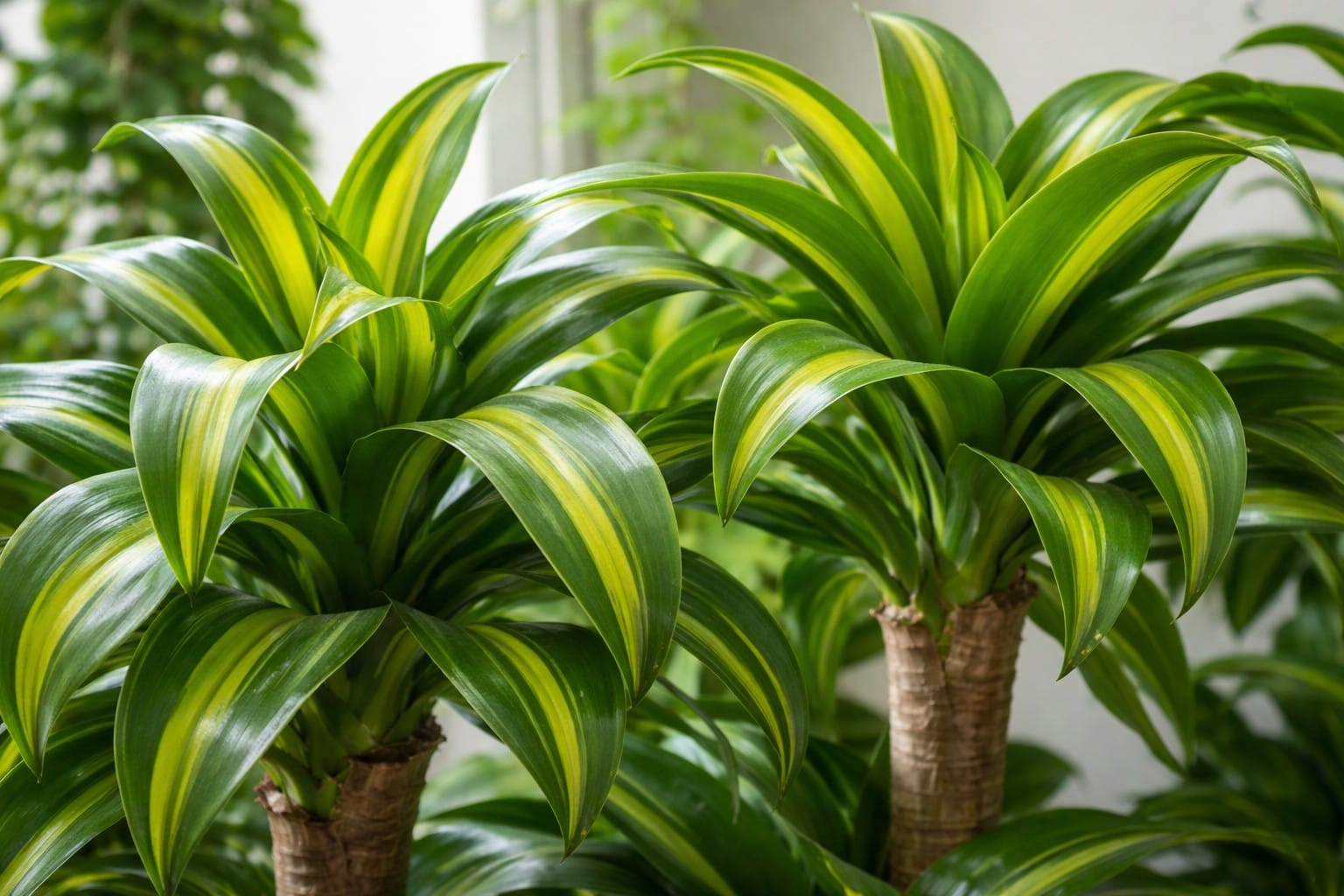
Dracaena fragrans, commonly known as the corn plant, is one of the most popular and reliable houseplants grown indoors. Loved for its tall cane-like stems and long arching leaves, this plant is perfect for homes, offices, and low-maintenance indoor spaces. It is attractive, forgiving, slow-growing, and known for tolerating low light better than many other houseplants.
This complete guide covers everything you need to know about Dracaena fragrans houseplants, including what it is, popular varieties, light and water needs, soil, potting, growth habits, pruning, propagation, common problems, toxicity, air-quality benefits, and expert care tips to help your plant thrive for years.
What Is Dracaena Fragrans
Dracaena fragrans is a tropical evergreen plant native to Africa, where it grows as a small tree. Indoors, it is grown as a houseplant with thick woody canes and long, glossy leaves that emerge from the top like fountains.
Key characteristics include:
- Upright, tree-like growth
- Thick cane stems
- Long strap-shaped leaves
- Slow to moderate growth rate
- Strong tolerance for indoor conditions
Despite the name, the flowers are rarely seen indoors, but when they do bloom, they are fragrant.
Why Dracaena Fragrans Is So Popular
This plant is often recommended for beginners because it is forgiving and adaptable.
Reasons it is a favorite houseplant:
- Easy to care for
- Tolerates low light
- Needs infrequent watering
- Grows well in indoor environments
- Long lifespan
- Works well as a floor plant
It also fits beautifully into modern, minimal, and tropical-style interiors.
Popular Dracaena Fragrans Varieties
Dracaena Fragrans ‘Massangeana’
The most common variety.
Features:
- Bright yellow stripe down the center of leaves
- Dark green leaf edges
- Strong visual contrast
This variety needs brighter light to maintain its yellow striping.
Dracaena Fragrans ‘Janet Craig’
A classic low-light plant.
Characteristics:
- Solid dark green leaves
- Glossy appearance
- Excellent for offices
It tolerates lower light better than most dracaenas.
Dracaena Fragrans ‘Lemon Lime’
A colorful option.
Features:
- Green, yellow, and lime-striped leaves
- Brighter appearance
- Slightly higher light needs
Dracaena Fragrans ‘Compacta’
A smaller, denser form.
Why it’s popular:
- Shorter leaves
- Tighter growth habit
- Slower growth
Ideal for desks and smaller spaces.
Light Requirements
Dracaena fragrans prefers bright, indirect light, but it is very adaptable.
Best lighting conditions:
- Bright indirect light near a window
- Tolerates medium and low light
- Avoid strong direct sunlight
Too much direct sun can burn the leaves, while very low light may slow growth and dull leaf color.
Watering Dracaena Fragrans
Overwatering is the most common problem with this plant.
Proper watering tips:
- Allow the top 1–2 inches of soil to dry before watering
- Water thoroughly, then let excess drain
- Never leave the plant sitting in water
Dracaena fragrans prefers slightly dry soil over constantly wet soil.
Water Quality Matters
Dracaenas are sensitive to fluoride and salts in tap water.
To prevent leaf tip browning:
- Use filtered or distilled water
- Let tap water sit overnight before use
- Flush soil occasionally to remove salt buildup
Humidity and Temperature
This plant prefers average indoor conditions.
Ideal range:
- Humidity: 40–60%
- Temperature: 65–85°F (18–29°C)
It tolerates normal household humidity well and does not require misting. Avoid cold drafts and sudden temperature changes.
Soil and Potting
Dracaena fragrans needs well-draining soil.
Best soil mix:
- Standard houseplant potting mix
- Added perlite or sand for drainage
Use a pot with drainage holes to prevent root rot.
Repotting
Repot every 2–3 years or when roots become crowded.
Signs it needs repotting:
- Roots growing out of drainage holes
- Soil drying out very quickly
- Slow growth
Choose a pot only one size larger.
Fertilizing Dracaena Fragrans
This plant is a light feeder.
Fertilizing tips:
- Feed every 4–6 weeks during spring and summer
- Use a balanced liquid fertilizer
- Dilute fertilizer to half strength
Do not fertilize in fall and winter.
Growth and Size Indoors
Indoors, Dracaena fragrans grows slowly but steadily.
Typical indoor size:
- Height: 4–6 feet
- Width: 2–3 feet
Growth speed depends on light, temperature, and care consistency.
Pruning and Shaping
Pruning helps control height and encourage branching.
How to prune:
- Cut cane stems at desired height
- New shoots will grow below the cut
- Remove yellow or damaged leaves
Pruning can make the plant fuller over time.
Propagation of Dracaena Fragrans
Propagation is easy and rewarding.
Common methods:
- Cane cuttings
- Top cuttings
Steps:
- Cut a healthy cane section
- Allow cut end to dry briefly
- Place in water or moist soil
- Roots form in a few weeks
Propagation is best done in spring or summer.
Common Problems and Solutions
Yellow Leaves
Possible causes:
- Overwatering
- Poor drainage
- Cold stress
Adjust watering and ensure proper drainage.
Brown Leaf Tips
Common reasons:
- Fluoride in water
- Low humidity
- Salt buildup
Use filtered water and flush soil occasionally.
Drooping Leaves
Causes include:
- Underwatering
- Sudden temperature changes
Check soil moisture and environment.
Pests
Occasional pests include:
- Spider mites
- Mealybugs
- Scale insects
Treat with neem oil or insecticidal soap if needed.
Is Dracaena Fragrans Toxic
Yes, Dracaena fragrans is toxic to cats and dogs if ingested.
Symptoms may include:
- Vomiting
- Drooling
- Loss of appetite
Keep the plant out of reach of pets.
Air Quality Benefits
Dracaena fragrans is often mentioned as an air-purifying plant.
Potential benefits include:
- Improving indoor appearance
- Contributing to better indoor air feel
- Increasing humidity slightly through transpiration
While it helps improve indoor environments, it should not replace ventilation.
Where to Place Dracaena Fragrans
Ideal locations include:
- Living rooms
- Offices
- Bedrooms with indirect light
- Corners near windows
It works well as a floor plant or accent piece.
Common Mistakes to Avoid
- Overwatering
- Using poor-draining soil
- Placing in direct sun
- Using fluoridated water
- Over-fertilizing
Consistency matters more than frequent care.
Frequently Asked Questions
Dracaena fragrans grows slowly indoors. It can survive in low light but grows best in bright indirect light. Brown tips are usually caused by water quality issues. It does not need frequent watering. With proper care, it can live for decades indoors.
Final Thoughts
Dracaena fragrans is one of the best houseplants for long-term indoor success. Its elegant form, low-maintenance nature, and adaptability make it perfect for beginners and experienced plant lovers alike. Whether placed in a home or office, it adds greenery without demanding constant attention.
With proper light, careful watering, and occasional feeding, your Dracaena fragrans houseplant can grow tall, healthy, and beautiful for many years, becoming a lasting part of your indoor space.