
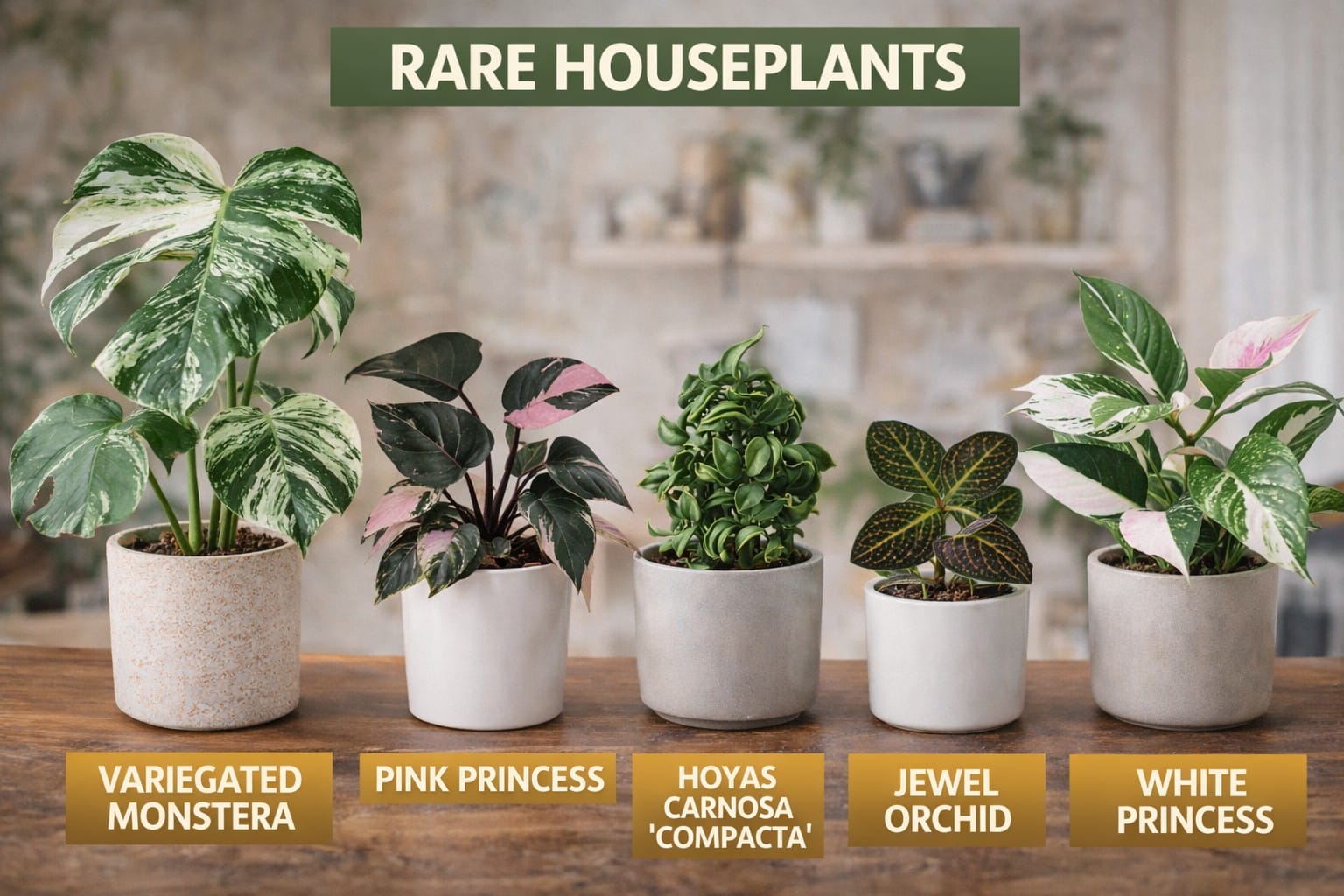
Rare houseplants are prized for their unusual leaves, striking colors, slow availability, and collector appeal. These plants are not your everyday pothos or snake plant. They are special, often hard to find, sometimes expensive, and deeply loved by plant collectors around the world. What makes them rare can include limited production, slow growth, unstable variegation, or very specific growing requirements.
Despite their reputation, many rare houseplants are not impossible to care for. With the right knowledge, patience, and environment, even beginners can successfully grow some rare plants. This in-depth guide covers everything about rare houseplants, including what makes them rare, the most popular rare plants, care requirements, light and humidity needs, common mistakes, propagation, costs, and expert tips to keep them thriving indoors.
What Are Rare Houseplants
Rare houseplants are plants that are hard to find in regular nurseries due to limited supply, slow propagation, or high demand. Some are naturally rare in the wild, while others are cultivated varieties with unique traits like variegation, unusual leaf shapes, or rare coloring.
A houseplant may be considered rare if it has:
- Unstable or unique variegation
- Very slow growth
- Limited commercial production
- High collector demand
- Strict growing requirements
- High price compared to common plants
Rarity does not always mean difficult, but it often means the plant needs more attention and consistency.
Why Rare Houseplants Are So Popular
Rare houseplants have exploded in popularity due to social media, plant collector communities, and interior design trends. Their bold appearance and exclusivity make them highly desirable.
Reasons people love rare houseplants include:
- Unique and eye-catching foliage
- Collector value and rarity
- Personal satisfaction from successful care
- Strong resale and trading potential
- Statement pieces for indoor décor
Owning a rare plant feels like owning living art.
Most Popular Rare Houseplants
Monstera Albo Variegata
One of the most famous rare houseplants.
Key features:
- White and green variegated leaves
- Unpredictable variegation patterns
- Slow growth
- High light requirements
Care notes: Needs bright indirect light and careful watering to prevent root rot.
Monstera Thai Constellation
A more stable variegated monstera.
Why it’s rare:
- Cream-colored speckled variegation
- Stable genetics
- Limited production
Easier to maintain than Monstera Albo but still requires good light.
Philodendron Pink Princess
Loved for its pink variegation.
Characteristics:
- Dark green to burgundy leaves
- Pink patches that vary by leaf
- Moderate growth
Bright indirect light helps maintain pink coloring.
Philodendron White Knight, White Wizard, and White Princess
These varieties are often confused but highly collectible.
Differences include:
- White variegation on dark leaves
- Slight stem and leaf shape variations
- Slow, steady growth
They prefer warmth, humidity, and bright indirect light.
Anthurium Crystallinum
Known for velvety leaves and bold veins.
Features:
- Dark green, heart-shaped leaves
- Silvery vein patterns
- High humidity needs
This plant thrives in warm, humid environments.
Alocasia Dragon Scale
A stunning alocasia variety.
Why it’s special:
- Textured leaves resembling dragon skin
- Silvery-green color
- Compact size
Sensitive to cold and overwatering.
Alocasia Frydek Variegata
One of the most expensive rare plants.
Features:
- Dark velvety leaves
- White or cream variegation
- Very slow growth
Requires high humidity and consistent care.
Syngonium Albo Variegata
A climbing plant with bold variegation.
Why collectors love it:
- Arrow-shaped leaves
- White and green patterns
- Easy propagation
Variegation can fade in low light.
Hoya Carnosa Compacta Variegata
Also called Hindu rope plant.
Characteristics:
- Twisted waxy leaves
- Slow growth
- Fragrant flowers when mature
Hoyas are hardy but slow-growing.
Ideal Growing Conditions for Rare Houseplants
Light
Most rare houseplants prefer bright, indirect light.
- Too little light causes loss of variegation
- Direct sun can burn sensitive leaves
- Grow lights are often helpful
Variegated plants need more light than solid green ones.
Watering
Watering must be precise.
General rules:
- Allow top soil to dry slightly
- Never let plants sit in water
- Use pots with drainage holes
Overwatering is the biggest killer of rare plants.
Humidity
Many rare plants come from tropical environments.
Ideal humidity range:
- 60–80%
- Use humidifiers
- Group plants together
- Use pebble trays
Low humidity causes leaf damage and slow growth.
Temperature
- Ideal range: 65–85°F (18–30°C)
- Avoid cold drafts and sudden changes
- Warm, stable conditions are essential
Soil and Potting for Rare Houseplants
Rare plants need well-aerated, fast-draining soil.
Common soil components include:
- Orchid bark
- Perlite
- Coco coir or peat
- Charcoal
This mix prevents root rot and allows oxygen to reach roots.
Fertilizing Rare Houseplants
Rare plants are light feeders.
Best practices:
- Fertilize every 4–6 weeks
- Use diluted balanced fertilizer
- Fertilize only during active growth
Over-fertilizing can damage roots and leaves.
Propagation of Rare Houseplants
Propagation increases plant value and collection size.
Common methods:
- Stem cuttings with nodes
- Air layering for monsteras
- Division for clumping plants
Propagation is often slow and requires patience.
Common Mistakes With Rare Houseplants
Many rare plants fail due to simple mistakes.
Avoid these errors:
- Overwatering
- Low humidity
- Insufficient light
- Poor airflow
- Using heavy soil
- Frequent repotting
Consistency matters more than frequent attention.
Are Rare Houseplants Hard to Care For
Not always. Some rare plants are surprisingly easy once their basic needs are met. Others are sensitive and require experience.
Easier rare plants include:
- Syngonium Albo
- Philodendron varieties
- Hoyas
More difficult rare plants include:
- Variegated alocasias
- Some anthuriums
- Plants with unstable variegation
Why Rare Houseplants Are Expensive
Prices are influenced by:
- Slow growth rates
- Limited supply
- High demand
- Difficulty of propagation
- Import and quarantine costs
Prices may decrease over time as plants become more common.
Best Places to Keep Rare Houseplants
Ideal locations include:
- Bright rooms with filtered light
- Plant cabinets with humidity control
- Warm indoor spaces
- Near east-facing windows
Avoid placing rare plants near heaters or air conditioners.
Benefits of Growing Rare Houseplants
- Unique and striking décor
- Personal satisfaction
- Learning advanced plant care
- Collector value
- Conversation starters
- Potential resale or trade value
Rare plants turn indoor gardening into a rewarding hobby.
Frequently Asked Questions
Rare houseplants often grow slower than common plants. Many require higher humidity and better light. Variegation can fade if light is insufficient. Most rare plants dislike overwatering. With patience and consistency, rare houseplants can live for many years indoors.
Final Thoughts
Rare houseplants are not just plants; they are living treasures. Their unique leaves, limited availability, and striking beauty make them deeply rewarding to grow. While they may require more care than common houseplants, the effort is worth it for collectors and plant lovers who enjoy a challenge.
With proper light, humidity, well-draining soil, and careful watering, rare houseplants can thrive indoors and become the centerpiece of any plant collection. If you enjoy learning, experimenting, and growing something truly special, rare houseplants are a perfect next step in your indoor gardening journey.