
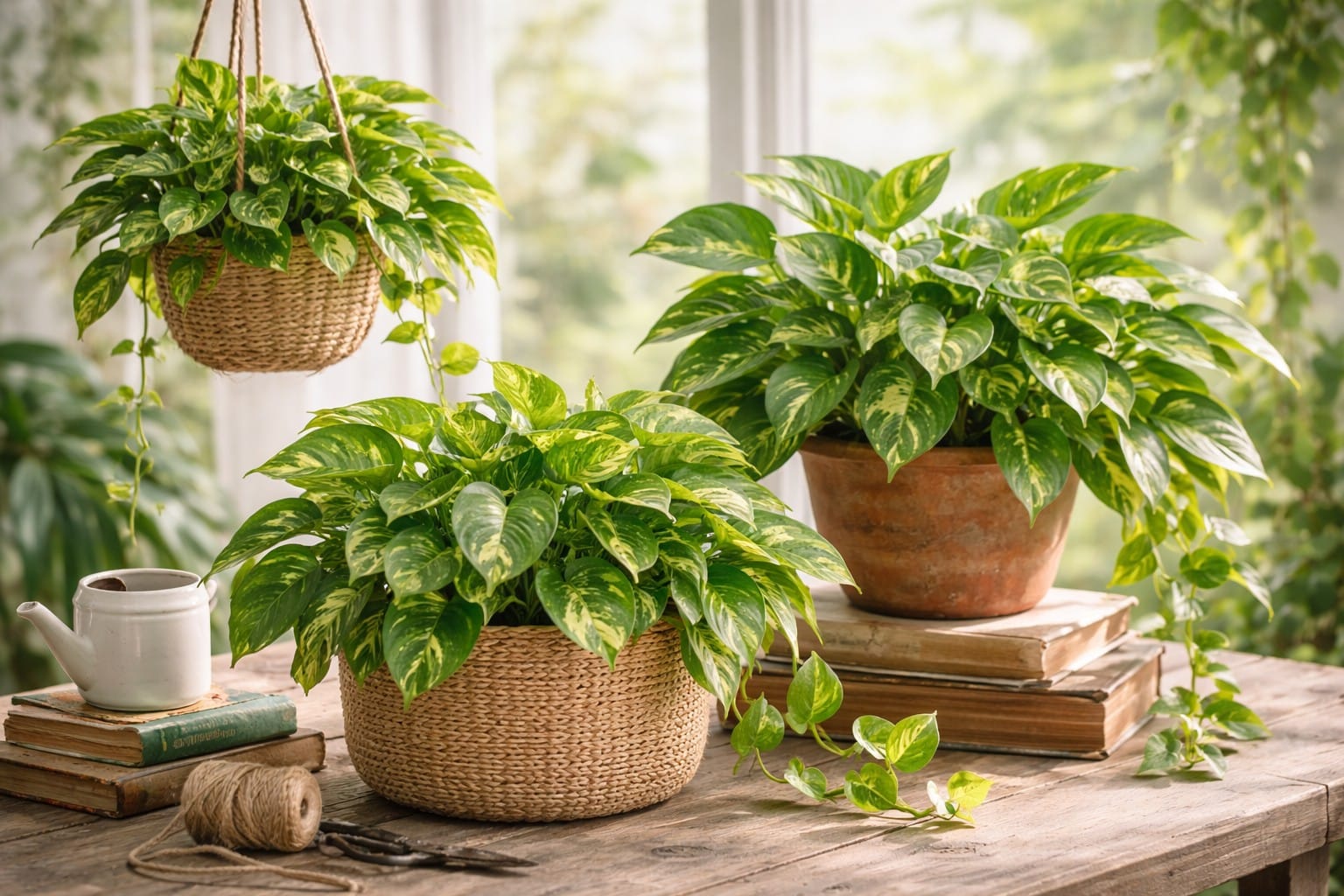
Pothos houseplants, also called Devil’s Ivy or Epipremnum aureum, are one of the most popular and versatile indoor plants worldwide. Known for their heart-shaped leaves, trailing vines, and vibrant variegation, pothos are ideal for beginners, busy plant owners, or anyone looking for a low-maintenance yet attractive indoor plant. They are hardy, adaptable, and grow well in soil or water, making them suitable for a wide range of indoor spaces, from offices and bedrooms to kitchens and living rooms.
Beyond their beauty, pothos are famous for their air-purifying qualities, helping remove harmful toxins such as formaldehyde, benzene, and xylene from indoor air. In addition, they are easy to propagate, tolerate low light, and can thrive even when slightly neglected, making them one of the best houseplants for beginner gardeners. This comprehensive guide will cover everything you need to know about pothos plants, including types, care tips, propagation, common mistakes, display ideas, benefits, symbolism, and expert advice to keep your plant thriving.
What Are Pothos Houseplants?
Pothos plants are tropical evergreen vines native to Southeast Asia and the Solomon Islands. They belong to the Araceae family, which includes other popular indoor plants like philodendrons and monsteras. Pothos are slow to moderate growers but are extremely resilient, able to adapt to a variety of indoor conditions, including low light, irregular watering, and even growing hydroponically in water.
Key features of pothos houseplants include:
- Heart-shaped, glossy leaves that can be green, variegated, or patterned
- Trailing vines that can reach several feet long indoors
- Ability to climb or cascade, making them perfect for shelves, hanging baskets, and trellises
- Tolerance to low light, drought, and minor neglect
- Air-purifying properties, improving indoor air quality
Because of their adaptability and beauty, pothos are commonly used in home décor, offices, apartments, and indoor gardens.
Why Pothos Plants Are So Popular
The popularity of pothos is due to their combination of beauty, resilience, and ease of care. They are forgiving plants that allow beginners to experiment with indoor gardening while still looking lush and attractive.
Some reasons pothos are so loved include:
- Low maintenance: Can survive low light and inconsistent watering
- Versatility: Can be grown in soil, water, hanging baskets, or on trellises
- Rapid growth: Produces long vines that fill empty spaces beautifully
- Air purification: Helps remove toxins from indoor air
- Easy propagation: Can create new plants from cuttings within weeks
- Decorative appeal: Perfect for trailing or climbing displays
Their trailing vines and elegant foliage make pothos suitable for both functional and decorative purposes, whether indoors or in semi-shaded outdoor spaces in warm climates.
Popular Pothos Varieties
There are several popular varieties of pothos, each with unique characteristics and growth habits.
Golden Pothos
- Bright green leaves with golden-yellow variegation
- Hardy and fast-growing
- Ideal for beginners
- Grows well in soil or water
Marble Queen Pothos
- Green and white marbled leaves
- Thrives in bright indirect light
- Slower growth but highly decorative
Jade Pothos
- Solid deep green leaves
- Extremely low-maintenance
- Tolerates low-light conditions
- Hardy and resilient
Neon Pothos
- Bright lime-green foliage
- Fast-growing and eye-catching
- Ideal for bright spaces or modern décor
Satin Pothos (Scindapsus pictus)**
- Dark green leaves with silver spotting
- Slightly velvety texture
- Moderate growth rate
- Grows best in medium to bright light
Cebu Blue Pothos
- Blue-green, elongated leaves
- Slower growth indoors
- Very attractive in hanging baskets or on trellises
Manjula Pothos
- Green, cream, and white variegated leaves
- Unique and rare
- Thrives in bright indirect light
- Moderate growth rate
By selecting different varieties, you can create a visually diverse indoor garden with pothos, combining trailing vines, climbing plants, and colorful foliage.
Ideal Growing Conditions for Pothos
Light
Pothos are highly adaptable but grow best in bright, indirect sunlight.
- Can survive low light, though growth slows
- Direct sunlight may scorch leaves, especially variegated varieties
- Rotate plants periodically to ensure even growth
Watering
Pothos are forgiving but overwatering is a common mistake.
- Water when the top 1–2 inches of soil are dry
- Reduce watering in winter when growth slows
- Overwatering can cause root rot, a major threat to pothos health
- Water-grown pothos need fresh water every 7–10 days
Soil
- Well-draining indoor potting mix is ideal
- Mix with perlite or sand to improve drainage
- Avoid compacted or heavy clay soil
Temperature and Humidity
- Optimal temperature: 65–85°F (18–30°C)
- Tolerates normal indoor humidity
- Higher humidity encourages faster growth but is not required
Propagation of Pothos
One of the biggest advantages of pothos is how easy they are to propagate.
Stem Cuttings
- Cut a healthy stem with 2–3 nodes
- Place in water or soil
- Roots appear within 1–2 weeks
- After roots grow, transfer to soil or continue growing in water
Division
- Separate a mature plant’s stems
- Plant each section individually
- Helps create fuller plants and bushier growth
Propagation is quick, making pothos a favorite plant to share with friends or expand your indoor garden.
Display Ideas for Pothos
Pothos can be displayed in many creative ways:
- Hanging baskets: Let vines cascade freely
- Shelves or ledges: Trailing vines create a lush look
- Trellises or moss poles: Encourage climbing
- Desks and windowsills: Grow in water jars or small pots
- Wall-mounted planters: Perfect for vertical greenery
Rotating the plant occasionally ensures even growth and prevents legginess.
Common Problems and Solutions
Yellow Leaves
- Usually caused by overwatering or poor drainage
- Solution: Let soil dry and improve drainage
Brown Leaf Tips
- Caused by dry air or inconsistent watering
- Solution: Mist leaves or maintain consistent watering
Slow Growth
- Caused by low light or nutrient deficiency
- Solution: Provide brighter light and occasional fertilizer
Root Rot
- Caused by excess water or poor drainage
- Solution: Remove affected roots and repot in well-draining soil
Pests
- Rarely, pothos may get spider mites or mealybugs
- Treat with insecticidal soap or wipe leaves gently
Fertilizing Pothos
- Use balanced liquid fertilizer every 4–6 weeks during spring and summer
- Dilute fertilizer to half strength for best results
- Avoid over-fertilization, which can burn leaves
Benefits of Pothos
- Air purification: Removes toxins from indoor air
- Low-maintenance: Thrives in a variety of conditions
- Easy propagation: Quickly produce more plants
- Decorative versatility: Trailing or climbing arrangements
- Beginner-friendly: Tolerates minor neglect and low light
Pothos are not just beautiful—they are functional plants that enhance indoor spaces while requiring minimal effort.
Symbolism and Meaning
- Luck and prosperity: Often associated with positive energy
- Resilience: Represents strength and adaptability
- Growth and abundance: Its trailing vines symbolize expansion and life
Many people grow pothos near entryways or desks to invite positive vibes and energy.
Frequently Asked Questions
- How long can a pothos live? With proper care, 10+ years
- Can pothos grow in low light? Yes, but growth slows
- Can pothos be grown in water? Absolutely, they thrive hydroponically
- Are pothos safe for pets? Slightly toxic if ingested, keep out of reach
- How often should I prune my pothos? Prune anytime to control growth and encourage branching
Final Thoughts
Pothos houseplants are extremely versatile, attractive, and low-maintenance, making them perfect for beginners, busy households, or anyone seeking indoor greenery. Their trailing vines, heart-shaped leaves, and air-purifying qualities add both beauty and functionality to any space.
With proper light, occasional watering, regular pruning, and attention to soil drainage, pothos plants thrive for years, producing lush foliage and trailing vines. Whether grown in soil or water, in pots or hanging baskets, pothos are a reliable, resilient, and highly decorative plant that brings life and positive energy to any indoor environment.