
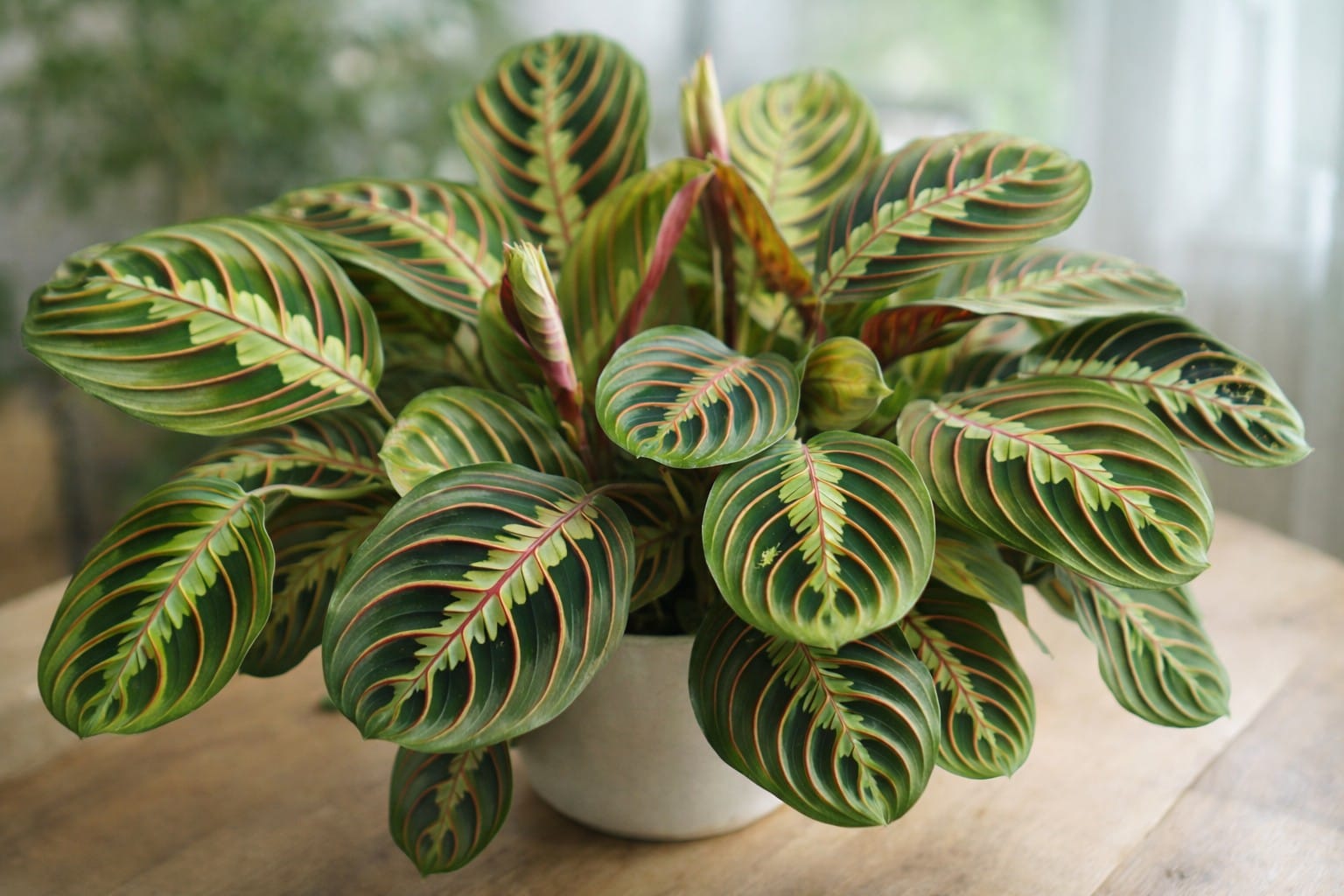
The prayer plant (Maranta leuconeura) is one of the most enchanting tropical houseplants, celebrated for its beautiful foliage and unique nightly leaf-folding habit, which resembles hands in prayer. Its vibrant patterns, low-maintenance care, and air-purifying qualities make it a favorite among indoor plant enthusiasts.
This guide will cover everything you need to know about prayer plants—from types, care tips, propagation methods, and common problems to styling ideas, health benefits, and FAQs. By the end, you’ll have all the knowledge to grow a thriving, lush prayer plant that brightens your home.
What is a Prayer Plant?
The prayer plant is a tropical perennial native to Brazil, belonging to the Marantaceae family. Its scientific name is Maranta leuconeura, and it is widely grown as a houseplant for its ornamental leaves and fascinating nyctinastic movements—a natural process where leaves fold upward at night.
Key features of the prayer plant:
- Leaves: Oval-shaped, dark green with bold patterns and contrasting veins, often red, pink, or light green.
- Stems: Low-growing, creeping stems that form dense mats in containers.
- Flowers: Small, delicate, and inconspicuous blooms, often white or pale purple.
- Height: Typically 6–12 inches indoors, spreading wider rather than growing tall.
- Behavior: Nightly leaf movement, folding upward as if in prayer.
The prayer plant is a versatile houseplant suitable for tables, shelves, hanging baskets, and terrariums, adding texture, color, and movement to indoor spaces.
Symbolism and Meaning
- Spiritual Significance: Named for its leaf-folding habit, the prayer plant symbolizes gratitude, reflection, and mindfulness.
- Peace and Serenity: Its gentle movements inspire calmness and tranquility, making it ideal for meditation spaces or bedrooms.
- Home Décor: Adds vibrancy and life to interiors with its striking foliage.
- Gifting: Considered a thoughtful gift symbolizing friendship, positivity, and care.
Popular Varieties of Prayer Plants
- Maranta leuconeura ‘Kerchoveana’ (Rabbit’s Foot Prayer Plant): Dark green leaves with silvery veins, perfect for low-light areas.
- Maranta leuconeura ‘Erythroneura’ (Red Vein Prayer Plant): Deep green leaves with red veins; visually striking in modern décor.
- Maranta leuconeura ‘Fascinator’ (Variegated Prayer Plant): Creamy-white or light green variegated leaves; adds brightness indoors.
- Maranta leuconeura ‘Marisela’ (Green Prayer Plant): Vibrant green foliage with subtle vein patterns, ideal for beginners.
- Maranta leuconeura ‘Bicolor’ (Two-Tone Prayer Plant): Dark green leaves with soft contrasting stripes, perfect for table displays.
These varieties allow plant lovers to mix patterns, colors, and sizes for a visually stunning indoor garden.
Ideal Growing Conditions
Light
- Thrives in bright, indirect sunlight.
- Avoid direct sun, which can burn leaves or fade patterns.
- Can tolerate low light, but growth will slow, and leaf color may be less vibrant.
Watering
- Keep the soil consistently moist but not soggy.
- Water when the top 1 inch of soil feels dry.
- Reduce watering during winter when growth slows.
- Use room-temperature water to avoid shocking the plant.
Soil
- A well-draining, peat-based potting mix works best.
- Add perlite or sand to improve drainage.
- Avoid heavy garden soil that retains excess water, leading to root rot.
Temperature and Humidity
- Ideal temperature: 65–80°F (18–27°C).
- Avoid drafts or temperatures below 55°F (13°C).
- High humidity is essential; mist leaves regularly, use pebble trays, or a humidifier.
Fertilization
- Feed with a balanced liquid fertilizer every 2–4 weeks during spring and summer.
- Reduce or stop fertilization in winter.
- Avoid overfertilizing, which can burn roots and damage leaves.
How to Plant and Repot Prayer Plants
Planting
- Choose a pot with drainage holes.
- Fill with peat-based, well-draining potting soil.
- Gently plant the prayer plant, keeping leaves above soil.
- Water lightly after planting.
Repotting
- Repot every 1–2 years, or when roots outgrow the container.
- Spring is ideal for repotting.
- Trim damaged roots and refresh soil for better growth.
Propagation Methods
Prayer plants are easy to propagate, allowing you to grow multiple plants from one:
1. Stem Cuttings
- Cut a healthy stem with 2–3 leaves.
- Place the cutting in water or moist soil.
- Roots develop within 2–4 weeks.
- Transplant into a pot once roots are established.
2. Division
- During repotting, gently separate the root clumps.
- Replant divisions into separate pots.
- Ensure each division has at least one healthy stem and root system.
Propagation allows you to expand your indoor jungle or gift plants to friends.
Styling Prayer Plants in Your Home
- Place in living rooms, bedrooms, or offices for a tropical feel.
- Pair with other low-light plants like ferns, pothos, or snake plants.
- Use colorful or decorative pots to enhance leaf patterns.
- Display on plant stands, shelves, or hanging baskets for a layered look.
- Rotate plants regularly for even growth and light exposure.
Common Problems and Solutions
- Brown Leaf Tips: Often caused by low humidity, inconsistent watering, or fertilizer burn. Increase humidity and adjust watering schedule.
- Yellow Leaves: Usually from overwatering or poor drainage. Check soil moisture and ensure pot drains properly.
- Leaf Curling: Result of temperature stress, low humidity, or underwatering. Adjust environmental conditions.
- Pests: Watch for spider mites, aphids, and mealybugs. Wipe leaves or apply insecticidal soap.
- Slow Growth: Low light or nutrient-poor soil can slow growth. Provide adequate light and fertilizer.
Benefits of Prayer Plants
- Air Purification: Helps filter toxins and improve indoor air quality.
- Aesthetic Appeal: Adds vibrant patterns, color, and texture to interiors.
- Stress Reduction: Caring for plants improves mood and reduces anxiety.
- Low Maintenance: Tolerant to indoor conditions and easy for beginners.
- Educational Value: Observing the leaf-folding movement can be fascinating and meditative.
FAQs About Prayer Plants
Q: How often should I water my prayer plant?
A: Water when the top inch of soil is dry, keeping soil moist but never soggy.
Q: Can prayer plants survive low light?
A: Yes, but patterns may fade and growth slows. Bright, indirect light is optimal.
Q: How do I propagate a prayer plant?
A: Through stem cuttings or division of root clumps; roots form in 2–4 weeks.
Q: Do prayer plants need high humidity?
A: Yes, they thrive in high humidity. Use misting, pebble trays, or a humidifier.
Q: Why do prayer plants fold their leaves at night?
A: This is natural nyctinasty behavior, a sleep cycle that protects the leaves and conserves energy.
Q: How long do prayer plants live?
A: With proper care, they can live many years, often becoming a long-term indoor companion.
Expert Tips for Thriving Prayer Plants
- Keep consistent watering and avoid sudden dryness or waterlogging.
- Provide bright, indirect light to maintain leaf patterns.
- Increase humidity in dry climates or during winter.
- Wipe leaves regularly to remove dust and improve photosynthesis.
- Rotate pots occasionally for even growth.
- Fertilize lightly during active growth and stop during dormancy.
Final Thoughts
The prayer plant is a fascinating and visually striking houseplant, perfect for indoor gardening enthusiasts. Its vivid foliage, unique leaf-folding habit, and low-maintenance care make it ideal for beginners and experienced plant owners alike.
By providing proper light, consistent watering, high humidity, and well-draining soil, you can cultivate a healthy prayer plant that thrives year after year. Pair it with other indoor plants, display it on stands, or use it in terrariums to create a lush, tropical indoor space.
Whether for beauty, calmness, or air purification, the prayer plant is a charming addition to any home, offering both aesthetic appeal and a small daily connection to nature.