
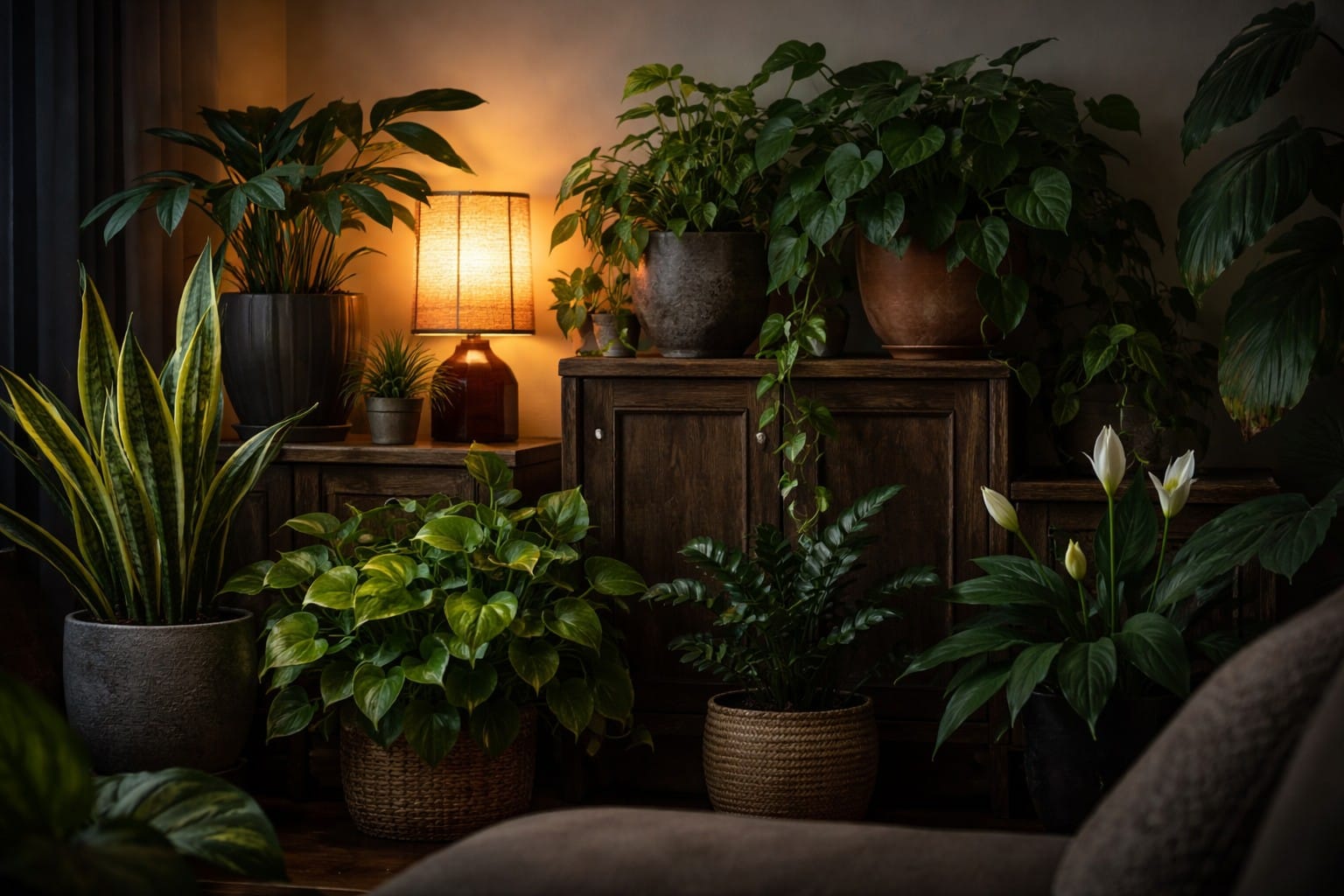
Low light houseplants make it possible to enjoy greenery even in homes and apartments that don’t receive much sunlight. Not every space has large windows or bright exposure, yet plants can still grow, survive, and even thrive with the right choices and care.
This in-depth guide explains everything you need to know about low light indoor plants. You’ll learn what low light actually means, which plants perform best, how to care for them step by step, common mistakes that quietly kill plants, smart substitutions, long-term maintenance tips, and expert insights to help you succeed even if you’ve failed with plants before.
What Low Light Really Means for Houseplants
Low light is one of the most misunderstood plant terms. Many people assume it means no light at all, but that is not true.
Low light typically means:
- Indirect sunlight only
- Light filtered through curtains or walls
- Rooms with north-facing windows
- Areas 6 to 10 feet away from windows
- Spaces where artificial lights are used during the day
A helpful rule is this: if you can comfortably move around the room and read during the daytime without turning on a lamp, low light plants can usually survive there.
Plants that tolerate low light usually come from forest floors, where tall trees block direct sun. They evolved to grow slowly and efficiently using limited light.
Why Low Light Houseplants Are So Popular
Low light houseplants are ideal for modern living spaces where sunlight, time, and experience are limited.
Their main advantages include:
- Lower watering needs
- Slower growth, which means less pruning
- Higher tolerance for mistakes
- Great fit for apartments and offices
- Ability to brighten dark corners naturally
They are especially appealing for beginners and busy people who want plants without constant care.
Best Low Light Houseplants That Actually Work
Not all plants labeled “low light” truly tolerate it. The following plants are proven performers.
Snake Plant (Sansevieria)
Snake plants are one of the toughest houseplants available. They tolerate low light, dry air, missed waterings, and temperature changes. Their stiff, upright leaves add structure and height to a room.
Water only when the soil is completely dry. Overwatering is the only real way to harm this plant.
ZZ Plant (Zamioculcas zamiifolia)
ZZ plants are famous for surviving neglect. Their thick stems and glossy leaves store water, allowing them to thrive in low light with minimal care.
They grow slowly, which is normal. Too much water or too much light can actually cause problems.
Pothos (Devil’s Ivy)
Pothos is a trailing plant that adapts easily to low light. It can be grown in pots, hanging baskets, or even water containers.
In lower light, leaf color may be less vibrant, but the plant remains healthy. Let the soil dry slightly between watering.
Peace Lily
Peace lilies prefer low to medium indirect light and reward good care with elegant white blooms. They clearly show when they need water by drooping slightly, which makes them beginner-friendly.
They prefer evenly moist soil but dislike soggy roots.
Cast Iron Plant (Aspidistra)
True to its name, this plant is extremely durable. It tolerates low light, dust, irregular watering, and temperature changes.
Growth is slow, but it can live for decades with basic care.
Chinese Evergreen (Aglaonema)
Chinese evergreens are valued for their patterned leaves and ability to thrive in low light. They enjoy warmth and slightly moist soil.
They are excellent for bedrooms, living rooms, and offices.
Heartleaf Philodendron
This plant grows well in low light and adapts easily to different environments. It can trail or climb and recovers quickly from neglect.
It is an excellent alternative to pothos if you want a similar look.
Tools and Supplies for Low Light Plant Care
You don’t need complicated tools, but the right basics make a big difference.
Essential supplies include:
- Pots with drainage holes
- Lightweight indoor potting mix
- Perlite or sand for better drainage
- A watering can
- A soft cloth for cleaning leaves
- Optional LED grow light for very dark rooms
Avoid heavy garden soil, which holds too much moisture indoors.
Step-by-Step Care for Low Light Houseplants
Step 1: Choose the Right Location
Place plants where they receive indirect light. Avoid direct sun, which can burn leaves, and avoid total darkness.
Rotate plants occasionally so all sides receive light.
Step 2: Water Less Than You Think
Low light plants use water slowly. Always check the soil before watering.
General watering tips:
- Let the top soil dry before watering
- Never let pots sit in standing water
- Reduce watering in winter
Most plant deaths in low light conditions are caused by overwatering.
Step 3: Use Well-Draining Soil
Roots need air as much as water. Well-draining soil prevents root rot, which is common in low light environments.
Adding perlite improves airflow and drainage.
Step 4: Fertilize Lightly
Low light plants grow slowly and need less feeding.
Fertilizing tips:
- Feed every 6–8 weeks in spring and summer
- Use diluted fertilizer
- Stop fertilizing in winter
Too much fertilizer causes weak, unhealthy growth.
Step 5: Keep Leaves Clean
Dust blocks light. Gently wipe leaves with a damp cloth once a month to help plants absorb more light.
Common Mistakes That Kill Low Light Plants
Even hardy plants can struggle if these mistakes are repeated.
Avoid:
- Watering on a fixed schedule
- Placing plants in windowless rooms
- Expecting fast growth
- Using oversized pots that stay wet
- Ignoring yellow or mushy leaves
In low light, slow and steady growth is a sign of health.
Low Light vs No Light Conditions
No houseplant can survive without light indefinitely. If a room has no windows and lights are rarely used, plants will weaken over time.
In these spaces, an LED grow light used for 6 to 8 hours a day can keep plants healthy without changing their natural rhythm.
Plant Substitutions for Low Light Homes
If one plant struggles, another may do better in the same space.
Useful substitutions include:
- Pothos instead of philodendron or vice versa
- ZZ plant instead of snake plant
- Chinese evergreen instead of peace lily
Each home has unique light conditions, even within the same room.
Long-Term Care and Maintenance
To keep low light plants healthy for years:
- Rotate pots every 1–2 months
- Repot every 2–3 years
- Trim leggy growth to encourage fullness
- Watch for pests in dry indoor air
Slow growth does not mean poor health. It often means the plant is well adapted.
Frequently Asked Questions
Are low light plants good for bedrooms?
Yes. Snake plants, ZZ plants, and Chinese evergreens are excellent bedroom choices.
Can low light plants live under artificial light only?
Yes, if lights are on consistently for several hours daily.
Do low light plants clean the air?
They help improve indoor air quality, though their main benefit is visual and emotional well-being.
Should low light plants be misted?
Usually no. Proper watering is more important than humidity.
What is the easiest low light plant for beginners?
Snake plants and pothos are the most forgiving options.
Expert Advice for Long-Term Success
Low light plants succeed when you respect their natural pace. They are not slow because they are weak; they are slow because they are efficient.
Water less, observe more, and adjust gradually. A healthy low light plant will have firm leaves, steady color, and slow but consistent growth.
Final Thoughts
Low light houseplants allow anyone to enjoy greenery, regardless of sunlight limitations. With the right plant selection and simple care habits, even dim spaces can feel alive and welcoming.
Start with one or two reliable plants, learn how they respond to your space, and build from there. Indoor gardening does not require perfect light—only patience and understanding.